Friends History
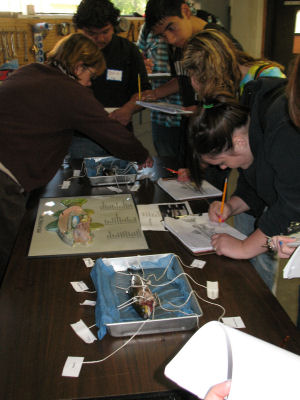
High School students attending the Kids in the Creek program learn fish anatomy.
Friends of Northwest Hatcheries (FNWH) was established as a non-profit 501(c) (3) organization in August, 1994. The Friends group was created to support affiliated fish hatchery outreach programs, to broaden public knowledge of the hatcheries and their benefit to the community, to raise awareness of the importance of our aquatic resources, and to help support hatchery projects in need of funding.
There are eight fish hatcheries affiliated with FNWH. The Leavenworth National Fish Hatchery Complex includes three: Leavenworth, Entiat and Winthop hatcheries located in North Central Washington. These were the first hatcheries to be associated with FNWH. In addition to those, the following have been added from 2000 to 2008: Carson and Spring Creek National Fish Hatcheries, located in Washington, and Dworshak, Kooskia and Hagerman National Fish Hatcheries located in Idaho.
The FNWH mission is to support natural resource stewardship and education in cooperation with the U.S. Fish and Wildlife Service fish hatcheries of the Northwest. To accomplish this mission we fund educational forums, teacher and student workshops, special events, interpretive services and informational material production. Members also volunteer hours of service to help with hatchery operations, special events, office work, fundraising and mentoring.
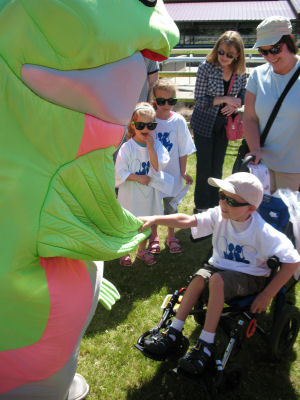
Mascot Frank Fish makes friends at the Leavenworth Fishing Day.
Friends of Northwest Hatcheries provides assistance to its affiliated hatcheries by awarding small grants for projects in need of non federal funding on an application basis. FNWH also awards educational grants to community organizations and the Cascade Discovery School Program, and supports volunteer projects implemented on hatchery grounds. Funds awarded by FNWH average $5,000 per year.
In addition to the funded programs mentioned above, FNWH supports the Wenatchee River Salmon Festival, by far its largest event. FNWH manages grants and funds donated for festival operation, contributes volunteer hours for planning and implementation, and donates discretionary funds for expenses.
As a non profit organization, FNWH operates with an elected board with governing by-laws and a Memorandum of Agreement with the U.S. Fish & Wildlife Service.
Membership is open to the general public.